
Conquest runs through Europe’s history. This is the continent that drew borders on other peoples’ maps, launched armadas, fought dynastic wars for centuries, and treated commerce and coercion as twin instruments of statecraft. That inheritance did not evaporate because modern European politics has become softer in tone, more managerial in style, and more eager to signal virtue than to project strength. What changed is not the capacity for ambition. What changed is the willingness to admit reality, to pay costs, and to accept consequences.
Nowhere is that gap clearer than in how Western Europe frames the Russia Ukraine war.
From a cold strategic angle, this war is rooted in geography, history, and proximity. It is a brutal contest in the Slavic space, a collision of neighbors with overlapping language regions, mixed populations, disputed borders, and competing claims about identity and legitimacy. Western European leaders speak as if moral messaging, funding rounds, and summit statements can force the map to obey the script. But wars do not end because speeches get sharper. They end when exhaustion, leverage, and hard incentives line up.
And the hard reality is this: Russia’s stated position is not a polite request for compromise. Reporting on Kremlin thinking has described demands that Ukraine cede all of Donbas, renounce NATO ambitions, and accept limits on Western forces. Ukraine has rejected those demands, and Ukrainian polling shows deep resistance to concessions in Donetsk even in exchange for security guarantees.
That matters because it anchors what can be responsibly claimed. You cannot fact check “never” in geopolitics, but you can fact check the direction of stated demands and the stubbornness of the bargaining positions. On that front, Western Europe’s public posture often looks detached from the battlefield logic that is shaping any eventual settlement.
So when people say “Europe,” they usually mean Western Europe. And when they say Western Europe, they mean Germany, France, and the United Kingdom, the historic engines that once called the shots.
But the UK left the European Union on January 31, 2020, and the transition period ended on December 31, 2020. Whatever the UK does now, it does it with more distance and more discretion than the Brussels centered project ever allowed.
That leaves Germany and France as the symbolic core. Germany is a serious country with an industrial base and institutional competence, but modern Germany is also shaped by deep caution about overt military power and by the constraints of domestic politics. France, meanwhile, has long been the loudest voice for “strategic autonomy,” the idea that Europe should stand as a distinct pole in world affairs. Yet rhetoric and capability are not the same thing.
The defense numbers tell the story. NATO’s benchmark for years was the Wales summit guideline to move toward 2 percent of GDP on defense. More recently, NATO says Allies committed at the 2025 Hague summit to investing 5 percent of GDP annually by 2035, including at least 3.5 percent for core defense and 1.5 percent for related security needs, with annual national plans to show a credible path.
That is the official posture. But alliance behavior is uneven. Spain has been the lowest spender by share of GDP and negotiated wording that allows it to avoid the full 5 percent commitment, sticking instead to around 2.1 percent as its stated plan. When an alliance requires every member to be credible, persistent gaps are not a footnote. They are an invitation to adversaries to test the edges.
Zoom out and the larger pattern is harder to ignore: Western Europe wants strategic relevance, but too often it funds the idea of relevance rather than the machinery that makes relevance real.
This is where the Nordic and Baltic regions come into focus.
The Nordic countries, Finland, Norway, and Sweden, can defend themselves. They are disciplined societies with serious institutions and real military capability. They also understand the stakes of the northern map in a way that many Western European capitals do not. But they do not want a continent wide war as a permanent condition of life.
The Baltics, Lithuania, Latvia, and Estonia, are different. Their anxiety is rational. Small states on the fault line do not get the luxury of abstract theories. They live with the fear that bigger powers will eventually negotiate over their heads. They want hard guarantees and they want them yesterday.
All of this would be complicated enough if the world were standing still. It is not.
While Europe debates itself, the Arctic is becoming a central arena of power. New shipping routes and resource access are increasing the strategic value of the high north, and that reality is already shaping policy. Reuters reporting this week described Italy urging NATO to coordinate in the Arctic as Greenland tensions escalate, citing concerns about Russian military buildup and Chinese ambitions.
Russia is not shy about its Arctic priorities. Analysts have described Russia’s push to control the Northern Sea Route and to modernize its Arctic military posture. China, for its part, published an Arctic policy white paper and frames itself as an active participant in Arctic affairs.
Meanwhile, the climate trendline is making the Arctic more accessible over time. NASA’s measurements show September Arctic sea ice is shrinking at about 12.2 percent per decade relative to the 1981 to 2010 average, a long run shift that changes shipping economics and strategic planning.
Put those pieces together and you get a simple conclusion: the future balance of power will be shaped by who builds the ports, the ice capable fleets, the surveillance infrastructure, the undersea cables, and the legal frameworks that govern the new corridors. The Arctic is not a curiosity. It is a lever.
So what does that mean for the United States and for the Western alliance?
It means America should stop treating European unity as an article of faith and start treating it as a variable. Alliances are not moral trophies. They are instruments for national security. If the instrument is out of tune, you either tune it or you change the arrangement.
That does not mean walking away from Europe. It means being honest about what is happening.
The alliance is being strained from two directions at once. One direction is the Russia Ukraine war, where Western European political language often outruns Western European willingness to endure long term risk. The other direction is the Arctic, where Russia and China are moving with the clarity of competitors, not the hesitation of committee states.
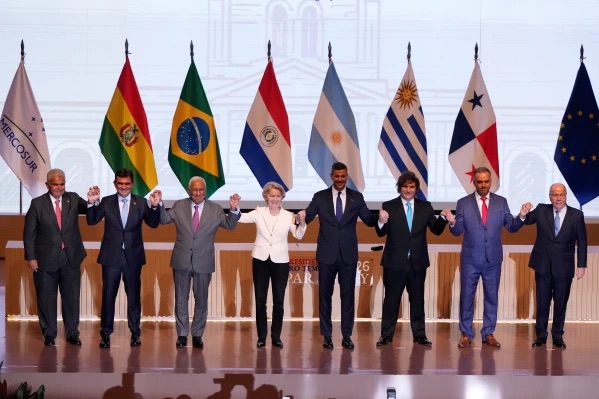
And yes, Western Europe has also created self inflicted vulnerabilities. Food security is not a fashionable topic until it becomes an emergency, but it is foundational. Europe is currently fighting over trade and agriculture, including the EU Mercosur trade deal, where farmers and governments warn about standards, competition, and the survival of local producers. Whatever one thinks of that agreement, the broader point stands: a continent that weakens local production and strategic autonomy in essentials is choosing dependency.
America’s response should be guided by interests, not nostalgia.
If Europe wants American security guarantees, Europe must demonstrate seriousness, not just solidarity. NATO’s new 5 percent by 2035 pledge is a clear test. Annual national plans will either become real budgets and real capability, or they will become another layer of paper over a widening gap.
Second, America should treat the Arctic as a core priority, not a secondary theater. Greenland is already back in the geopolitical headlines precisely because its location matters, and allies are openly debating Arctic posture as tensions rise. The United States does not need reckless rhetoric. It needs clear strategy: strengthen Arctic basing and logistics, deepen coordination with Denmark and Greenland’s authorities, invest in ice capable capacity, and build the partnerships that prevent adversaries from writing the rules.
Third, America should be disciplined about the Russia Ukraine end state. A durable settlement will require terms that reflect battlefield realities and credible deterrence for what comes after. That is not softness. That is realism. It is also the only way to prevent Europe from drifting into an endless crisis posture that drains its economies and tempts escalation without delivering resolution.
Europe can still be a partner worth having. But partnership is earned through capability, cohesion, and honesty about the world as it is.
The Arctic race is accelerating. NATO has raised the spending bar. Russia’s demands remain maximalist. China is positioning itself for influence far from its shores.
America should recalibrate accordingly, not out of spite, but out of duty to its own future.



Leave a Reply