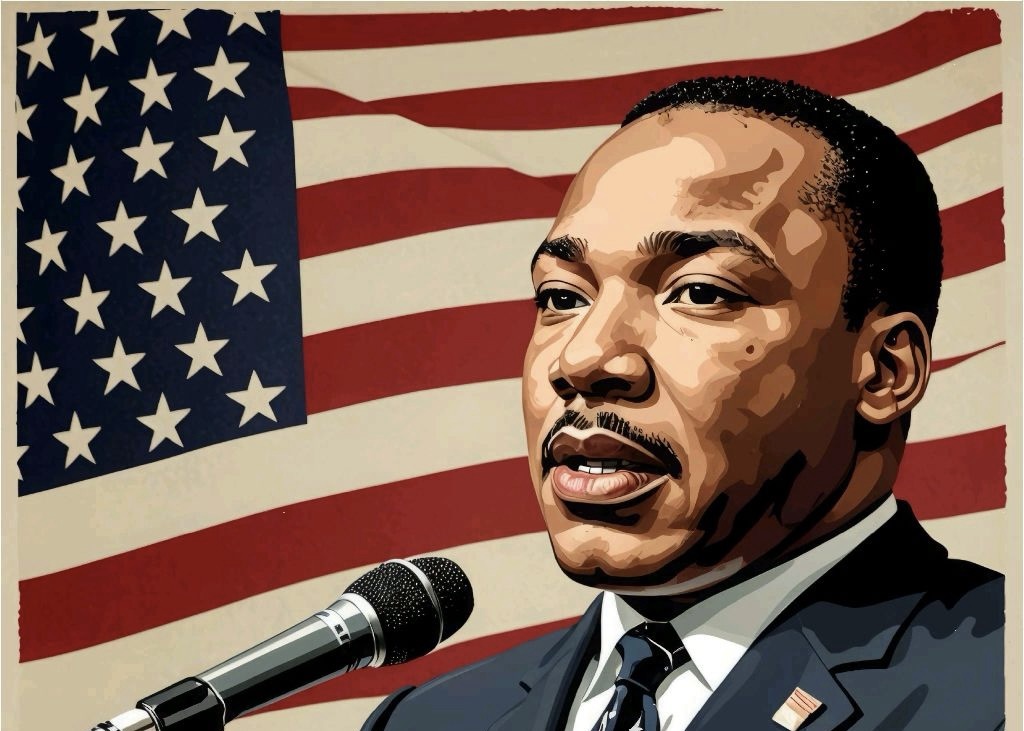
Every January, America honors Martin Luther King Jr., a man who asked this country for something simple and profoundly moral. He wanted a nation where every person would be judged by the content of their character. Not their color. Not their category. Not their place in a quota system. Character.
Sixty years later, that dream is not only unfulfilled. It has been abandoned.
Instead of building a society rooted in merit and dignity, America has built a new system of identity politics. Diversity, equity, and inclusion has become a national obsession. It divides people into groups, assigns virtue or guilt based on ancestry, and demands engineered outcomes instead of earned success. It is the opposite of what King preached. It is the opposite of what he died for.
And while the country congratulates itself for its corporate diversity statements and its endless equity seminars, the real condition of Black America has grown worse in the areas that matter most. King would not be celebrating. He would be grieving.
The numbers are not vague. They are devastating.
According to the Census Bureau, only 31% of Black adults are married today. That is the lowest marriage rate of any major group in the country. Half of all Black adults have never been married at all. In the early 1960s, about 25% of Black children were born outside marriage. Today, that number is close to 70%. As of 2023, 50% of Black children live with one parent, and 47% of Black mothers raise children alone.
Family structure is the foundation of every other outcome in life. Education. Income. Crime. Stability. Hope. When the family collapses, everything else collapses with it. King understood this. He spoke constantly about responsibility, discipline, and moral renewal. He believed that civil rights required strong families and strong communities.
But after his death, the Great Society programs of Lyndon Johnson reshaped the entire welfare system. They were sold as a cure for poverty. Instead, they created a vast bureaucracy that punished marriage and rewarded single parent households. Over time, these programs grew into one of the largest government undertakings in American history.
How large? The United States has spent more than $25 trillion on welfare and anti poverty programs since 1965. By 1987, welfare spending had already reached $834.4 billion per year. By 2022, federal transfer payments reached $4.1 trillion in a single year. Inflation adjusted spending per person in poverty rose from $2,701 in 1969 to $29,214 in 2024.
This is not a small investment. It is one of the most expensive social experiments in human history. And yet the condition of the Black family has deteriorated, not improved.
Crime tells the same story. Black communities suffer the highest rates of victimization and incarceration in the country. The reasons are complex, but the link between fatherlessness and crime is one of the most consistent findings in social science. A boy without a father is more likely to struggle in school, drop out, join a gang, or end up in the criminal justice system. King would not have ignored this. He would have confronted it directly.
But today, the DEI establishment refuses to talk about any of this. It is easier to blame every disparity on racism than to confront the hard truth that culture, policy, and personal responsibility matter. It is easier to demand quotas than to demand excellence. It is easier to preach grievance than to preach character.
Racism still exists. No honest person denies that. But racism alone cannot explain why Black marriage rates have collapsed since the 1960s while legal discrimination has vanished. It cannot explain why single parent households have skyrocketed during the same period that welfare spending exploded. It cannot explain why some Black communities thrive while others fall apart.
King would have seen through the excuses. He would have demanded better from America, from its institutions, and from its citizens. He would have insisted that equality means opportunity, not guaranteed outcomes. He would have rejected the idea that people should be judged by their group identity rather than their individual character.
Most of all, he would have mourned the condition of the very communities he fought to uplift.
He would see children growing up without fathers. He would see neighborhoods hollowed out by crime. He would see schools that fail generation after generation. He would see a political class that throws money at problems instead of fixing them. And he would see a cultural elite that talks endlessly about equity while ignoring the collapse of the most important institution in any society: the family.
King’s dream is not dead. But it is in danger. And it will stay in danger until America finds the courage to speak honestly about what has gone wrong.
We do not honor King by reciting his speeches once a year. We honor him by living up to the moral vision he laid out. A nation where character matters more than color. A nation where families are strong. A nation where opportunity is real. A nation where every child has a fighting chance.
That dream is still worth fighting for. But first, we must admit how far we have strayed.


Leave a Reply