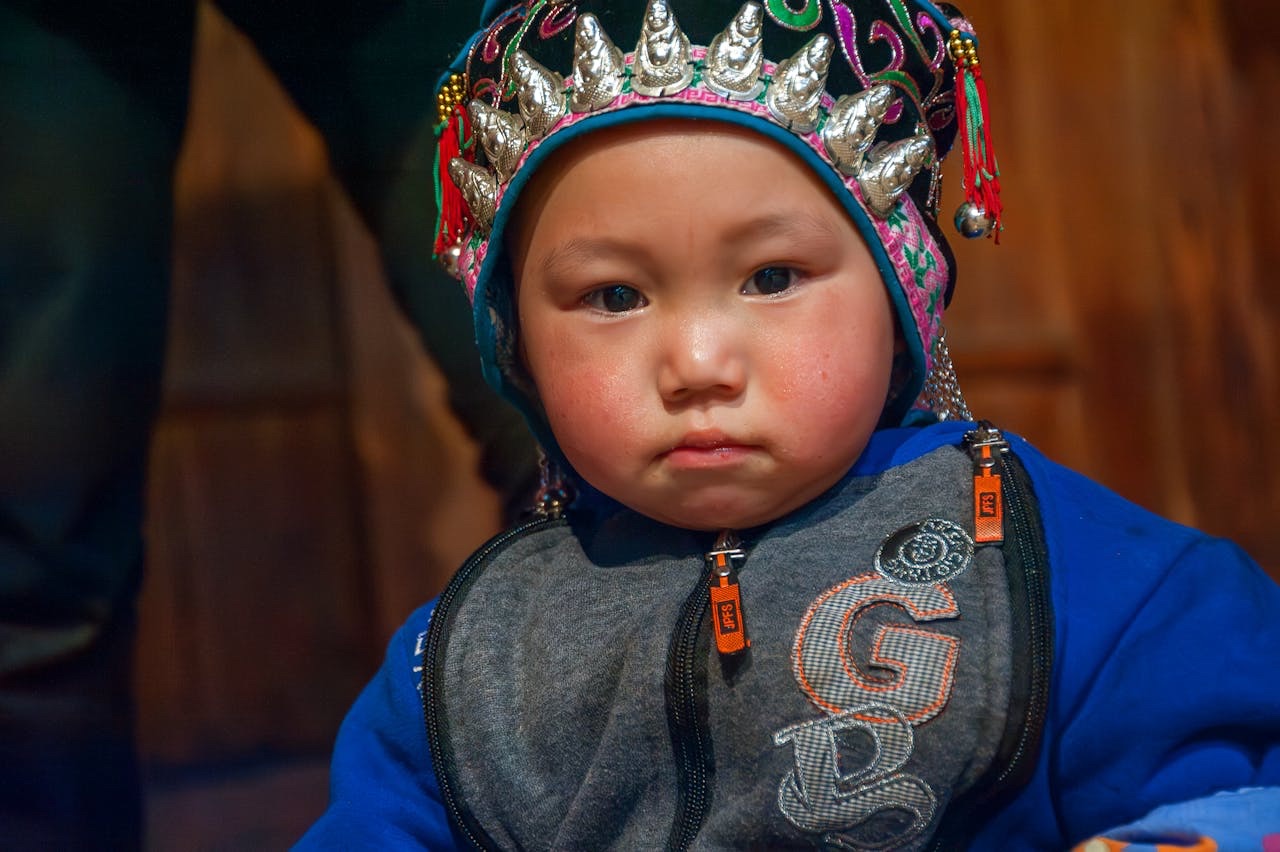
China is currently grappling with a demographic contraction that is unprecedented in modern history. After decades of explosive growth, the nation’s population has begun to shrink, with the fertility rate plummeting to approximately 1.0—well below the 2.1 required for a stable population. While conventional analyses often cite the high cost of living or the legacy of the One-Child Policy, these are symptoms of a deeper, systemic issue.
The root cause of China’s population decline lies in the high level of institutional uncertainty created by the Communist Party. By prioritizing state control over individual agency, the CCP has eroded the sense of optimism necessary for personal growth and development, leading a generation to view childbearing not as a fulfillment of life, but as an untenable risk.
The Legacy of Arbitrary Control
The most immediate precursor to the current crisis is the legacy of the One-Child Policy. However, its impact is more psychological than purely mathematical. For decades, the CCP treated human reproduction as a state-managed industrial output rather than a personal right. This history of invasive social engineering created a foundational sense of “policy trauma.” Even as the state pivots toward “pro-natalist” incentives, such as cash handouts and tax breaks, the underlying message remains the same: the individual’s private life is subject to the whims of the Party. This creates a “trust deficit” where citizens are hesitant to make a twenty-year commitment like raising a child when the rules can be altered overnight by a distant central authority.
Economic Rigidity and the Stifling of Personal Growth
The CCP’s recent crackdowns on private sectors, ranging from tech and tutoring to real estate, have fundamentally altered the trajectory of personal development in China. For young professionals, these industries once represented the “Chinese Dream”: a path toward upward mobility and self-actualization. By dismantling these sectors to assert political control, the Party has replaced a meritocratic ladder with a ceiling of political rigidity. When individuals feel that their career prospects are capped by state-owned monopolies or political loyalty rather than talent, the optimism required to build a family evaporates. In an environment where personal growth is stunted, the “Involution” (neijuan) phenomenon takes hold—a state of hyper-competition for diminishing rewards where people feel they are running faster just to stay in the same place.
The “Lying Flat” Movement as Silent Protest
The rise of the “Tang Ping” (lying flat) and “Bai Lan” (let it rot) movements are direct responses to this institutional uncertainty. These are not merely subcultures of laziness; they are rational adaptations to a lack of agency. When the state creates an environment where home ownership is unaffordable, job security is fleeting, and political expression is dangerous, the logical response is to minimize one’s “surface area” to risk. Choosing not to have children is the ultimate form of this minimization. In a society where the Party demands “national rejuvenation,” the refusal to reproduce is a quiet but profound rejection of a future that offers the state power at the expense of individual happiness.
Conclusion
China’s demographic crisis is not a failure of biology or a simple economic hurdle; it is a crisis of confidence. The CCP’s insistence on absolute control has created a “compressed” existence for its citizens, characterized by high stakes and low autonomy. Without a fundamental shift toward protecting individual rights and fostering an environment where personal growth is predictable and rewarded, the state’s incentives will continue to fall on deaf ears. Until the Chinese people feel that the future belongs to them rather than the Party, the cradle will remain empty.



Leave a Reply