
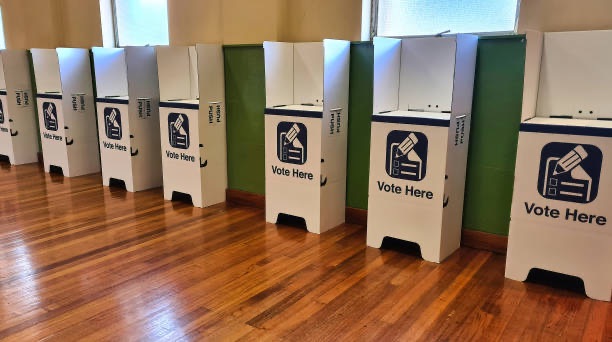
In a decisive turn that bolsters conservative momentum across Latin America, Nasry Asfura has emerged victorious in Honduras’s tightly contested presidential election, marking a significant rejection of leftist governance and aligning the nation more closely with United States interests. The National Party candidate, openly supported by President Donald Trump, secured 40.3 percent of the vote, narrowly defeating Salvador Nasralla’s 39.5 percent, according to the official tally from the National Electoral Council. This outcome, announced after weeks of delays plagued by technical issues and fraud allegations, underscores a growing regional trend toward right leaning policies that prioritize security, economic stability, and strong bilateral ties with Washington.

The election, held on November 30, was marred by controversies, including system outages that halted the count and prompted accusations of manipulation from outgoing President Xiomara Castro and her Libre party supporters. Castro, constitutionally barred from seeking reelection, decried the process as an “electoral coup” and pointed fingers at alleged interference from Trump, who had warned of consequences if Asfura’s lead was overturned. Despite protests in Tegucigalpa and calls for recounts, the CNE’s hand count of disputed tally sheets confirmed Asfura’s win, a result hailed by US Secretary of State Marco Rubio as a step toward enhanced cooperation on migration and regional security.
Asfura, in a post on X, vowed to govern without letting Hondurans down, signaling a departure from the socialist oriented policies of the Castro administration, which critics argue exacerbated poverty, corruption, and mass migration. This victory echoes similar shifts in countries like Argentina and El Salvador, where leaders have abandoned progressive agendas in favor of market driven reforms and law enforcement crackdowns. For the United States, under Trump’s renewed leadership, Honduras’s pivot represents a key win in his national security strategy, which emphasizes the Western Hemisphere as a primary sphere of influence to counter external threats from powers like China and Russia.
Rubio’s statement highlighted the potential for joint efforts to curb illegal immigration and boost economic partnerships, aligning with Trump’s pre election pledges to fortify America’s southern flank. The president’s endorsement of Asfura, coupled with his controversial pardon of former Honduran leader Juan Orlando Hernandez on drug charges, drew international scrutiny but appears to have galvanized conservative voters weary of leftist rule. As tensions simmer with opposition figures like Congress President Luis Redondo labeling the result “illegal,” the focus now shifts to ensuring a smooth transition amid calls for unity.
This electoral realignment not only revitalizes Honduras’s prospects for growth but also reinforces the Trump doctrine: a united Americas, free from ideological experiments that foster instability, poised to thrive under American guidance. As the region witnesses this rightward surge, Vox Americana views it as a harbinger of renewed strength, where nations reclaim sovereignty by embracing proven paths to prosperity.


Leave a Reply