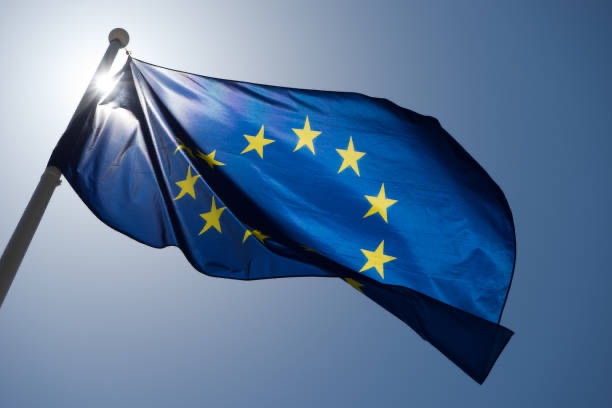
The European Union has finally taken a long overdue step: creating an EU level list of “safe countries of origin” so member states can fast track asylum claims from countries deemed generally safe and concentrate limited capacity on the cases that are truly about protection.
This is directionally right. It is also far too late to pretend it will “solve” anything on its own, because Europe is not facing a small policy glitch. It is living through a mass migration shock that is historically rare for the continent in speed and scale, and the reality is already baked into Europe’s cities, schools, housing markets, and politics.

What changed, and why it matters
On December 18, 2025, the Council of the EU announced a provisional agreement with the European Parliament on the first EU list of safe countries of origin. The countries named are Bangladesh, Colombia, Egypt, India, Kosovo, Morocco, and Tunisia.
The point is straightforward: if a country is considered generally “safe,” authorities can process claims faster because most claims from that country are presumed unlikely to meet the asylum threshold. People can still argue their individual case, but the system no longer has to treat every claim as if it has the same probability of being valid.
The EU says the list begins applying when the Asylum Procedure Regulation applies in full, on June 12, 2026.
This matters because Europe’s asylum systems have been buried under volume, appeals, and backlogs. Faster triage is necessary if Europe wants any credibility left in the word “border.”
But it is not a time machine. It cannot undo the last decade.
The true scale: how many foreigners are already in Europe
When people say “many millions,” the responsible question is: which official measure are we using. Here are the cleanest headline numbers from official statistical sources:
• EU residents born outside the EU: 44.7 million people on January 1, 2024, about 9.9% of the EU population.
• EU residents who are non EU citizens: 29.0 million on January 1, 2024, about 6.4% of the EU population.
• Europe as a region, international migrant stock: 94 million international migrants at mid year 2024, using the UN definition.
And Europe is still absorbing very large inflows:
• In 2023, 4.3 million people immigrated to the EU from non EU countries (this statistic excludes some temporary protection reporting for Ukraine depending on country method notes).
Even if the EU tightened every screw tomorrow, these numbers tell you the blunt truth: Europe is not debating whether mass migration will transform society. In many places, it already has.
“Unprecedented” is not a metaphor
Europe has faced movement of peoples before. But the modern era is different because the pace is relentless, and welfare states were not designed to absorb rapid, high volume inflows year after year without major political consequences.
On top of that, Europe also absorbed the largest displacement crisis in Europe since World War II after Russia’s invasion of Ukraine. Eurostat reported 4.31 million people under temporary protection in the EU as of December 31, 2023, and UNHCR has described the Ukraine war as the fastest growing and largest displacement crisis in Europe since World War II.
That Ukraine wave is not the same as irregular migration from outside Europe. But it did something important: it further tightened housing, services, budgets, and patience. It shrank Europe’s margin for error.
The integration problem Europe avoids naming
Europe’s governing class often talks as if migration is only an economic input: workers in, GDP up, problem solved.
That is fantasy.
A healthy Western democracy depends on norms that are not automatic everywhere: equality before the law, free speech tolerance, religious pluralism, women’s equal rights, and loyalty to the constitutional order over clan, sect, or imported political identity.
The issue is not that every newcomer rejects these values. Many do not. The issue is that when arrivals are massive, and assimilation is treated as optional or even impolite to demand, Europe imports value gaps at scale. Parallel societies form. Trust erodes. Police and courts face pressures they were never built for. Politics radicalizes.
So yes, the EU safe countries list is a start. But it is a narrow tool aimed at procedures. It does not restore social cohesion. It does not reverse demographic change. It does not magically produce assimilation.
What is it costing to house, feed, and care for millions?
There is no single honest “Europe total” because budgets vary and because not all migrants are in state funded reception systems.
Here are grounded benchmarks:
• EU wide, Ukraine refugee fiscal cost: IMF staff estimated short term fiscal costs across the EU could reach €30 billion to €37 billion in the first year, around 0.2% of EU GDP.
• Germany: Reuters reported Germany planned to spend €26.6 billion on refugees in 2023, citing the finance ministry.
• Netherlands: Euronews reported a 2025 budget of about €9.48 billion for admission and reception of foreigners, including asylum seekers.
• And Dutch COA reporting cited in Dutch press put asylum accommodation costs at €2.7 billion in 2023, driven in part by expensive emergency housing.
• Italy: Infomigrants reported Italy’s interior minister put migrant reception costs at €1.7 billion per year.
• United Kingdom (European comparison): Reuters reported Britain’s asylum hotel accommodation now costs £2.1 billion annually.
• Reuters fact check also said Home Office figures show £3.0 billion spent housing asylum seekers in hotels in the 2023 to 2024 financial year.
Take those together and you get the inescapable conclusion: in major destination countries, the price tag of accommodation and support is routinely measured in billions per year, and EU wide costs for large protected cohorts can reach tens of billions even before you count second order costs like housing market pressure, schooling capacity, and long run integration programs.
The sober verdict
Europe is right to harden procedures. It is right to stop pretending every claim is equally valid. It is right to rebuild deterrence and restore the concept of return for failed claims.
But Europe should not lie to itself: the policy class is trying to patch a ship after it has already taken on water for years. A safe countries list is a bucket. Europe still needs the repairs: enforcement, returns, and a serious expectation of assimilation grounded in the non negotiable values of Western democracy.




Leave a Reply