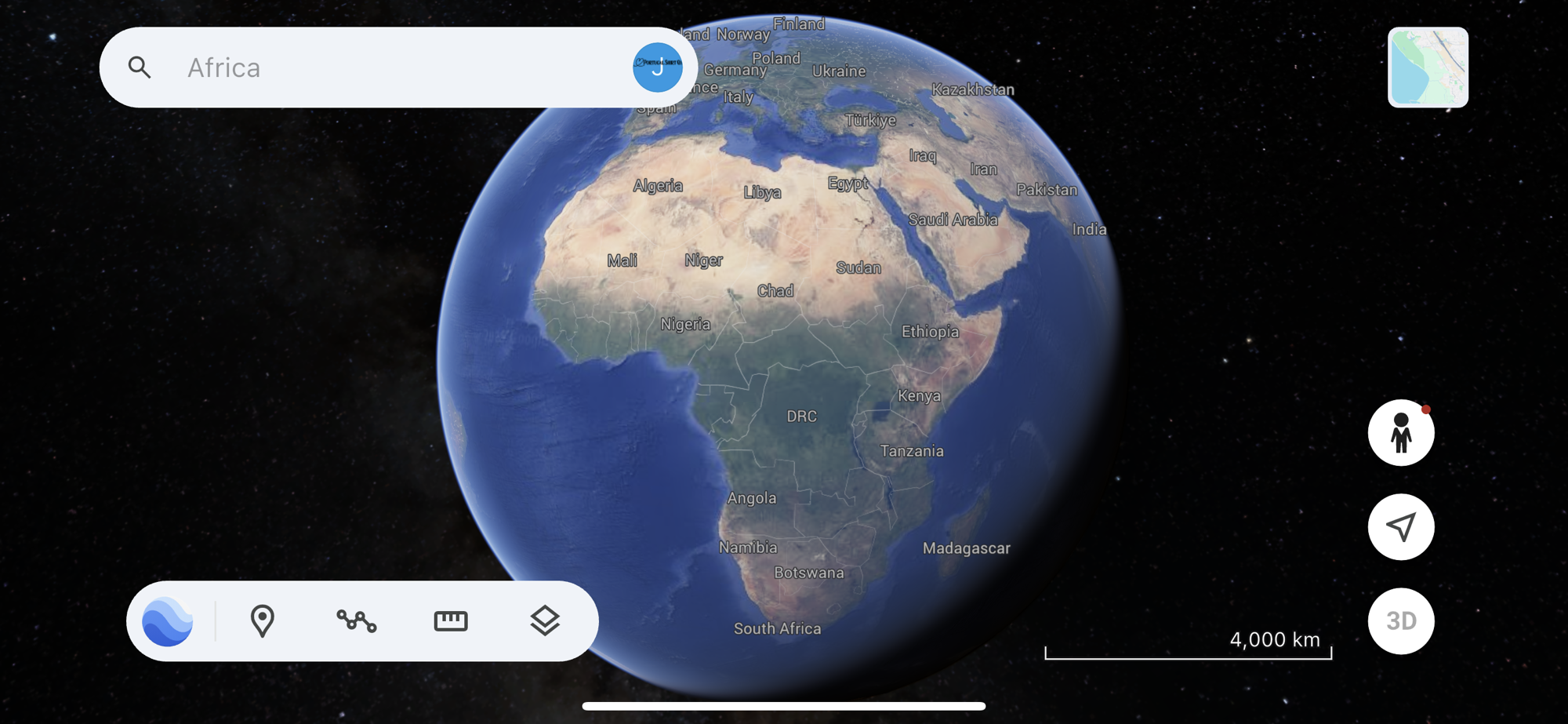
Walk through parts of Lagos, Kinshasa, Luanda, Nairobi, or Accra at street level and the contradictions hit you fast. You can find world class talent, booming informal commerce, and vibrant culture operating right alongside pothole scarred roads, unreliable electricity, clogged drainage, unsafe water, trash accumulation, and housing that looks improvised because, in many places, it is. The human energy is real. So is the everyday friction that grinds that energy down.
Africa is not a country, and there are places that are improving in meaningful ways. But when you zoom out across major indicators, too many countries and cities across the continent still lag behind what their people should reasonably expect in 2025. According to the World Bank’s regional dashboard for sub Saharan Africa, GDP per capita is about $1,441 (current US$) in 2024, internet use is about 37% in 2024, access to electricity is about 53.3% in 2023, and safely managed sanitation is about 26% in 2022.

Those numbers are not just abstractions. They translate into clinics that cannot reliably refrigerate medicines, students who cannot study at night, small businesses that cannot power equipment, and neighborhoods where basic public health becomes a daily gamble. The World Health Organization has reported that in sub Saharan Africa only about half of hospitals have reliable electricity.
And yet, Africa is also wealthy in the most literal sense. By some estimates, the continent holds roughly 30% of the world’s mineral reserves, including many of the minerals central to modern industry and the clean energy transition. That is why the question that hangs over this topic is hard and unavoidable:
How can a continent with so much human potential and natural wealth still struggle so visibly with basic development and basic city function?
To answer honestly, you have to cover history. You have to talk about colonialism, what happened after independence, and how governance, corruption, competence, and the unglamorous details of maintenance, budgeting, and accountability shape daily life. You also have to keep the everyday person in view, because the average family did not design these systems, did not steal the money, and did not write the procurement rules that keep public works broken.
The colonial period: infrastructure existed, but its purpose mattered
Colonial rule left behind physical infrastructure and administrative structures in many places: ports, rail lines, government buildings, courts, civil services, police forces, and export oriented agricultural systems. It is not wrong to say that colonial governments built infrastructure. Many historical summaries note that colonial regimes introduced institutions and constructed significant infrastructure in a relatively short period.
But it is not enough to stop there. Much of that infrastructure was designed for extraction and control, not broad based development. Railways and roads frequently connected mines and plantations to ports, not villages to markets or neighborhoods to jobs. Research on colonial railroads shows how lines built before 1960 shaped where cities formed and grew, precisely because transport corridors created economic gravity. Colonial infrastructure was often “solid” in the sense that it was engineered and maintained to serve a clear objective. The problem is that the objective was not the welfare of the colonized population. It was moving commodities outward and projecting authority inward.
Colonial cities were often built as divided systems. There were formal districts with services and enforcement, and informal or neglected districts where Africans lived with fewer rights and fewer services. That dual city logic did not disappear at independence. In many places it simply changed who sat at the top while the structure of unequal service delivery remained.
So yes, colonialism left institutions and assets behind. But it also left distorted economies, fragile legitimacy, and borders and political systems that were not designed to create cohesive nations with a shared civic bargain. Those distortions did not automatically doom newly independent states, but they made the job of building functional, inclusive development much harder than it looked on paper in the 1960s.
After independence: the moment of promise meets the reality of state capacity
Independence movements carried real moral force and real popular hope. But many new governments inherited states that were thin, centralized, and dependent on a narrow export base. They inherited administrations that could run a port or collect certain taxes, but often lacked deep capacity in municipal management, urban planning, engineering maintenance, education systems at scale, and public health logistics across huge territories.
Then the numbers changed. Population growth and urbanization accelerated. The World Bank notes that between 1960 and 2021 the urban population in sub Saharan Africa rose from about 33.3 million to just over 494 million, and the share of the population classified as urban rose from 14.6% to 41.8%. That kind of urban expansion can be a development engine, but only if cities can convert growth into productivity: roads that function, land markets that work, reliable utilities, public safety, and rules that are predictable enough for investment.
Instead, many cities expanded faster than their institutions could plan, service, or finance. When formal housing is scarce and permits are slow or corrupt, people build anyway. When the grid cannot keep up, households improvise. When waste collection is sporadic, trash piles up. None of this is because ordinary people prefer disorder. It is because the formal system is too weak, too expensive, too captured, or too absent.
There is also a neglected but decisive concept here: maintenance culture. Building a road is visible. Maintaining it is politically painful because it is expensive, continual, and not glamorous. Yet maintenance is the difference between a paved road that lasts 15 years and a paved road that becomes a crater field in 3. Studies of infrastructure in sub Saharan Africa have noted how limited paved road networks and maintenance constraints hold the region back. When maintenance fails, potholes are not a mystery. They are the signature of governance failure.
The resource paradox: wealth that can become a trap
Now add natural resources to the story. In theory, resource wealth should finance development: schools, clinics, power generation, water systems, and modern transport. In practice, resource wealth can become a governance poison, especially where institutions are weak.
This is the “resource curse” problem. Large rents from oil, gas, and minerals can reduce leaders’ dependence on taxing citizens, weaken accountability, intensify patronage competition, and fuel corruption and conflict. The dynamic is straightforward: when money arrives without accountability, politics becomes a fight over control of cash flows instead of a competition to deliver results.
When money arrives from a mine or an oil terminal, the political game often becomes: who controls the flows, who gets contracts, who gets jobs, who gets security protection, and who gets paid to stay quiet. If the civil service is not merit based, procurement is not transparent, and courts are not independent, resource revenue does not become public goods. It becomes private wealth plus political control.
This is where the critique of the bureaucratic and political class lands hardest. The problem is not that Africa lacks ideas, labor, or resources. The problem is that in too many places, the incentive system rewards extraction from the state rather than service to the public.
Transparency International’s Corruption Perceptions Index consistently places sub Saharan Africa as the lowest scoring region globally, with a regional average score of 33 out of 100 in the 2024 CPI. That does not prove every official is corrupt. It does not mean corruption is cultural. It does mean the system is too often permissive of theft, favoritism, and impunity, which shows up in broken roads, unfinished projects, and schools without basic materials.
Cities as a mirror: why urban life feels chaotic
People often describe African cities as chaotic, poorly planned, and poorly managed. The harsh truth is that many are. But chaos is usually an outcome, not an identity. It comes from specific failures.
1) Land and property systems that do not function at scale
If land tenure is uncertain, if titles are slow or corrupt, if zoning is inconsistent, and if informal settlements have no pathway to legal recognition, then urban growth happens outside the system. Once that happens, installing infrastructure becomes vastly more expensive. You cannot easily add sewer lines, wide roads, and drainage after the fact.
2) Weak municipal finance
Cities cannot run on speeches. They run on revenue. Property taxes, service fees, and transparent transfers from national government are what pay for trash collection, street lighting, drainage clearing, and road maintenance. When municipal finance is weak, cities become places where population grows but services do not.
3) Procurement that rewards connections instead of competence
If contracts go to friends, donors, relatives, or politically connected firms, the results are predictable: inflated costs, low quality work, and projects abandoned halfway through. This is not an “African” problem. It is a governance problem. But it becomes devastating when combined with rapid growth.
4) Urbanization outpacing institutions
When growth is fast and planning capacity is low, informal settlements expand. Globally, the UN reports that about 1.12 billion people lived in slums or informal settlements in 2022. In many African cities, informal housing is not marginal. It is the city.
5) Infrastructure gaps that compound each other
Power, roads, water, and sanitation are not separate problems. They multiply. No power means water pumps fail. No drainage means roads wash out. Bad roads mean maintenance crews cannot reach critical assets. Weak infrastructure also drags growth. The African Development Bank estimates Africa’s infrastructure needs at roughly $181 to $221 billion per year over 2023 to 2030.
Put those pieces together and the lived experience becomes familiar: stalled traffic, flooding after rains, piles of waste, dimly lit streets, businesses running generators, and public frustration that quietly turns into resignation.
The human story: ordinary people are not the problem
This must stay central if the essay is going to be fair: the average person is not the author of this failure.
Most people are trying to survive. They are trying to feed their families in economies where formal jobs are limited and the cost of living can be brutal relative to income. The World Bank reports a poverty headcount of about 46% at $3.00 a day (2021 PPP) in sub Saharan Africa in 2024. In health, the burdens are also stark. UNICEF reports that in 2023 sub Saharan Africa had about 454 maternal deaths per 100,000 live births and accounted for about 70% of global maternal deaths. The Global Nutrition Report puts stunting in Africa at about 30.7%, a marker of persistent deprivation that affects learning and lifetime earnings.
These realities produce understandable anger. They also produce a dangerous temptation among elites: to blame the poor for the conditions they did not create.
Yes, citizens have responsibilities. People can pick up trash. Neighborhood groups can organize cleanups. Shop owners can keep sidewalks clear. Communities can shame those who dump waste in waterways. Those actions matter, and where government is weak they matter even more.
But citizen virtue cannot substitute for functioning institutions. A family cannot pave a road network. A neighborhood cannot run a power grid. A street committee cannot enforce transparent procurement or prosecute graft. The bureaucratic and political class exists to do those jobs. When they do not, “personal responsibility” becomes a convenient slogan that shifts blame downward.
The real indictment: a failure of the governing bargain
At the deepest level, underdevelopment persists where the governing bargain is broken.
A healthy bargain looks like this: citizens pay taxes and obey laws, and in return the state provides security, basic infrastructure, predictable rules, and fair opportunity. When that bargain is real, citizens defend institutions because they have something to lose.
In too many places, the bargain is inverted: citizens are policed and squeezed, but services are absent and opportunities are rationed through patronage. Under those conditions, rational people disengage. They stop trusting. They stop investing. They retreat into informality or leave entirely. And the system rots further.
That is why the critique of the managerial class matters. A modern city is, in many ways, a management problem: budgeting, staffing, technical standards, maintenance schedules, procurement discipline, and enforcement of basic rules. Where those are strong, cities become engines of productivity. Where those are weak, cities become expensive warehouses for human potential.
What would a credible path forward look like?
If you want to challenge elites without turning cynical, name reforms that are concrete and unglamorous, because development is mostly unglamorous.
Professionalize municipal management
City managers, planners, engineers, procurement officers, and inspectors should be trained, certified, and hired through merit based systems. Performance should be measured and published.
Make maintenance nonnegotiable
Every capital project should include a funded maintenance plan. Roads, drainage, pumps, and transformers must be maintained as if the economy depends on it, because it does.
Open contracting and radical transparency
Publish contracts, unit costs, bidders, and delivery milestones. Let citizens and journalists compare what was promised to what was delivered.
Strengthen local revenue with fairness
Property tax systems are politically hard, but without revenue cities cannot function. Pair tax reform with visible service improvements so citizens see what they are paying for.
Channel resource wealth into public goods, visibly
Where resources exist, build mechanisms that convert them into infrastructure and human capital, not political fortunes. The resource curse is not magic. It is incentives plus impunity.
Upgrade informal settlements instead of pretending they are temporary
Provide legal pathways, basic services, drainage, and transport links. Treat informal residents as citizens with rights, not as inconveniences.
Civic pride without scapegoating
Encourage neighborhood cleanliness and small acts of order, while keeping the main accountability aimed upward, toward procurement, budgeting, enforcement, and integrity.
Closing: sympathy for the people, zero tolerance for the excuses
Africa’s underdevelopment is not a story of incapable people. It is a story of systems that fail to convert human effort and natural wealth into public goods.
Colonialism matters, but it is not the only chapter. Post independence choices matter. The quality of governance matters. The honesty and competence of city management matters. And the moral scandal is that the costs of failure are paid by mothers in understaffed clinics, by children whose growth is stunted by malnutrition, by workers stuck for hours in traffic because roads collapse and transport is unmanaged, and by entrepreneurs who spend their profits on diesel instead of growth.
We can be empathetic and still be demanding. In fact, empathy requires demands. If you truly care about the everyday person, you cannot accept a political class that treats public office as a route to personal wealth. You cannot accept a bureaucratic class that mistakes paperwork for performance. And you cannot accept the lazy fatalism that says, “This is just how it is.”
It is not how it has to be.


Leave a Reply