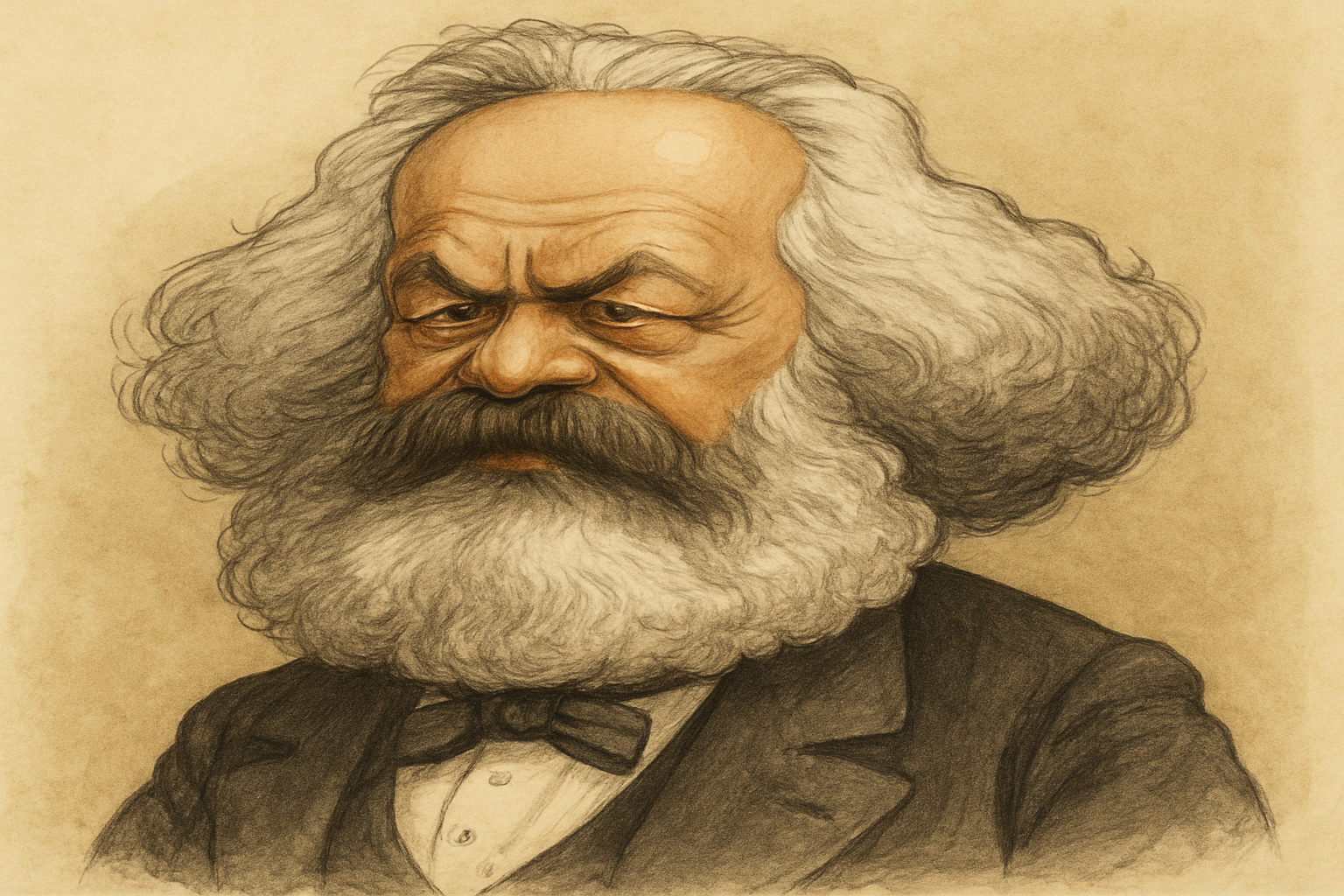
Karl Marx’s life is a study in contradiction. The man who wrote about freeing humanity from exploitation lived in poverty so severe that four of his seven children died young. His household in London was marked by hunger, illness, and reliance on Friedrich Engels for financial support. Marx’s writings promised liberation from want, yet he could not shield his own family from it.
The irony deepens when considering the legacy of his ideas. Marx’s vision of a classless society inspired revolutions across the twentieth century. Yet the regimes that claimed his mantle became synonymous with repression and mass death. Stalin’s Soviet Union, Mao’s China, and Pol Pot’s Cambodia together accounted for tens of millions of deaths through famine, purges, and forced labor. Scholars estimate that communist governments caused between eighty and one hundred million deaths worldwide.
Marx himself never governed. He was a theorist, not a statesman. His writings were complex and open to interpretation, but later leaders turned them into rigid dogma. Marx envisioned liberation, not gulags or purges. Still, the historical record shows that communism in practice became one of the deadliest forces in history.
This creates a double irony. Marx’s children died because of poverty, even as he wrote about ending poverty. His ideas promised freedom but delivered tyranny. His personal suffering was real, but the suffering caused in his name was immeasurable.
Marx’s story is a cautionary tale about the gap between theory and practice. It reminds us that ideas, however noble in intent, can be twisted into instruments of oppression. The man who sought to liberate humanity became the intellectual father of movements that multiplied misery. His life and legacy stand as one of history’s most bitter paradoxes.



Leave a Reply