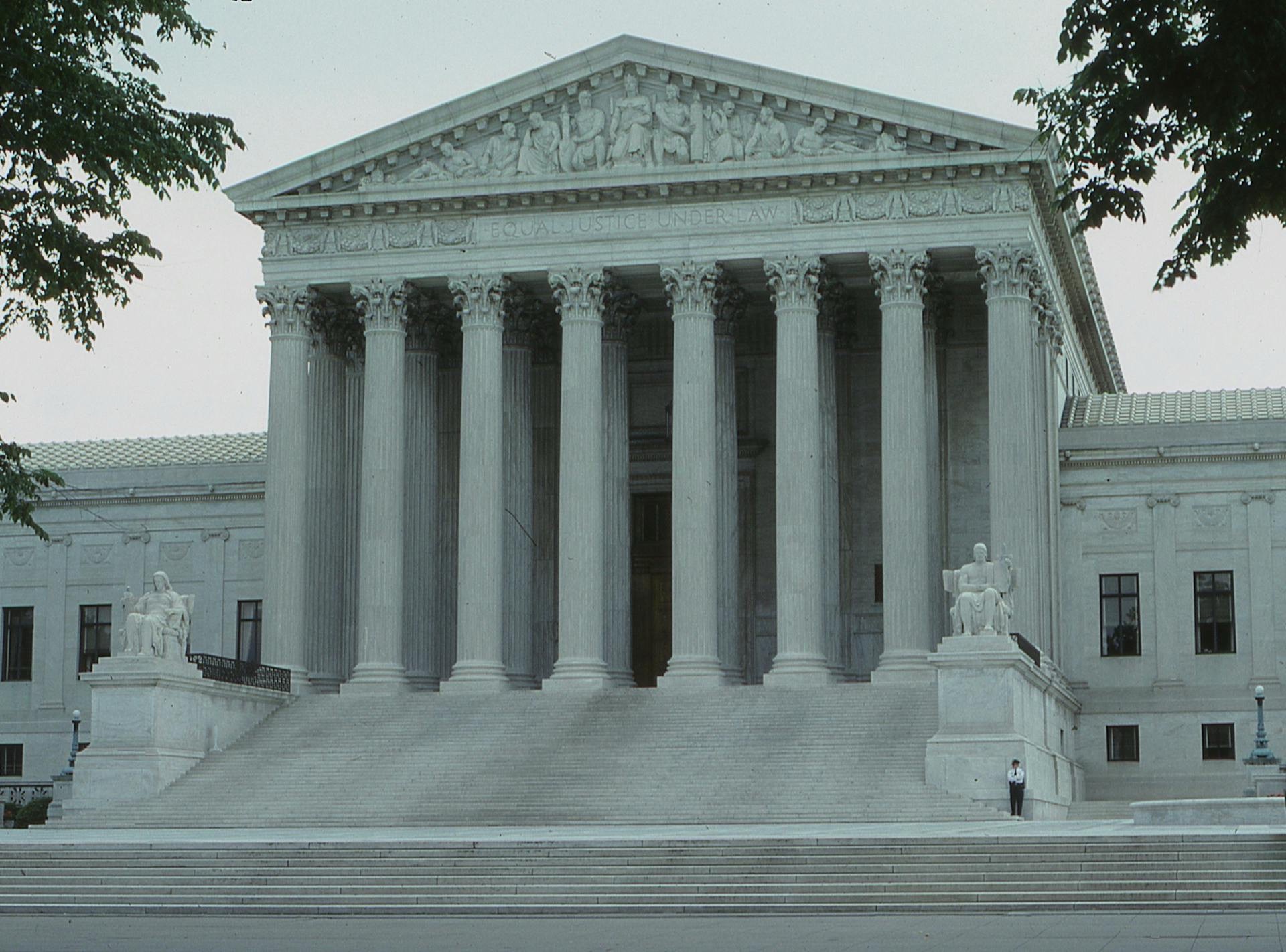
For years, Democrats have screamed “racism” every time they lose a political fight they can’t win at the ballot box. The latest example: the Supreme Court’s decision to let Texas use its new congressional map in the 2026 elections. You’d think the justices had shut down voting altogether from the way the left is reacting. In reality, the Court did something simple and correct: it recognized that Texas lawmakers drew a political map, not a racial one – and politics is supposed to be decided by voters and legislatures, not federal judges.
Here’s what actually happened. A lower federal court in Texas tried to block the new map, claiming it was an unconstitutional racial gerrymander. Texas appealed, arguing that the map was aimed at helping Republicans and shoring up vulnerable seats, which is the very kind of partisan line-drawing the Supreme Court has already said is a political question, not something federal courts are supposed to micromanage. The high court’s 6–3 majority agreed that the lower court crossed the line, failed to give the legislature the presumption of good faith, and meddled in the middle of an ongoing election cycle by changing the rules after candidates had already started filing.

This is exactly in line with Rucho v. Common Cause, the 2019 case where the Supreme Court said partisan gerrymandering may be ugly, but it’s not the federal judiciary’s job to decide how many seats each party “deserves.” If a map is drawn to help one party, that’s something voters, state courts, or Congress can fix with reforms. It’s not something nine unelected justices should be red-penciling from Washington.
Democrats are furious because the Texas map could give Republicans up to five extra House seats. Let’s be honest: that’s the real complaint. This isn’t about “saving democracy.” It’s about protecting Democratic power in Washington. When Republican-controlled states like Texas redraw maps, it’s called “rigging elections.” When Democrat-controlled states do the same thing, it’s suddenly “math and geography.”
Take Massachusetts. In 2024, Donald Trump won about 36% of the statewide vote there. In many cycles, Republicans pull between 30% and 40% of the vote in the Bay State. Yet the congressional delegation is 9 Democrats, 0 Republicans. Not a single GOP voice in the House from a state where more than a third of voters clearly lean right.
A recent Massachusetts story even quoted one of the Democratic map-drawers bragging that Republican votes are scattered so evenly you “can’t draw” a Republican-leaning district. Convenient, isn’t it? Somehow the lines always fall in a way that keeps Democrats safe and Republicans shut out. But we’re told that’s just neutral “math,” not gerrymandering. Meanwhile, even Democratic strategist Julian Epstein has admitted that Democrats have “no clean hands” on this issue, pointing straight at places like Massachusetts, New Jersey, Illinois, and California, where Republicans are effectively gerrymandered into political extinction.
So spare us the lectures. If Democrats really believed partisan gerrymandering was a mortal sin, they’d start by dismantling the safe blue fortresses they’ve built in their own states. Instead, they demand unilateral disarmament from Republicans while quietly maximizing their own advantage back home.
None of this means every map is perfect or that we shouldn’t seek fairer ways to draw districts. If people want independent commissions or stricter rules, state legislatures and Congress have the power to pass them. But that’s the point: those are political choices. The Supreme Court is simply acknowledging reality. Drawing district lines has always been political. What crosses the constitutional line is racial discrimination, not the fact that one party is trying to beat the other.
In Texas, the lower court basically looked at a hard-fought partisan map and decided it must be racist. The Supreme Court said: not so fast. You need clear proof of racial intent, not just the fact that Republicans are trying to pick up seats. It also reminded the lower courts they can’t blow up an election calendar mid-stream because they suddenly don’t like the map after the filing period has started.
If anything, this ruling is a small step back toward electoral stability. Voters should know what the districts are before campaigns begin. Legislatures, not judges, should be the ones drawing the maps. And if people don’t like the way their maps look, they can vote out the politicians who drew them, or change state law, instead of begging federal courts to rescue one party from its own political weaknesses.
Here’s the uncomfortable truth the left doesn’t want to admit: both parties gerrymander when they control the pen. The difference is that Republicans in Texas are honest about drawing a political map, while Democrats in places like Massachusetts pretend their maps are magically “neutral” even as they erase Republican representation for millions of voters.
The Supreme Court’s decision doesn’t end the gerrymandering debate. It just puts it back where it belongs: in the hands of the people and their state governments, not unelected judges. If Democrats want to talk about fairness, they should start by cleaning up their own maps, and stop repeatedly calling every Republican win a threat to democracy.


Leave a Reply