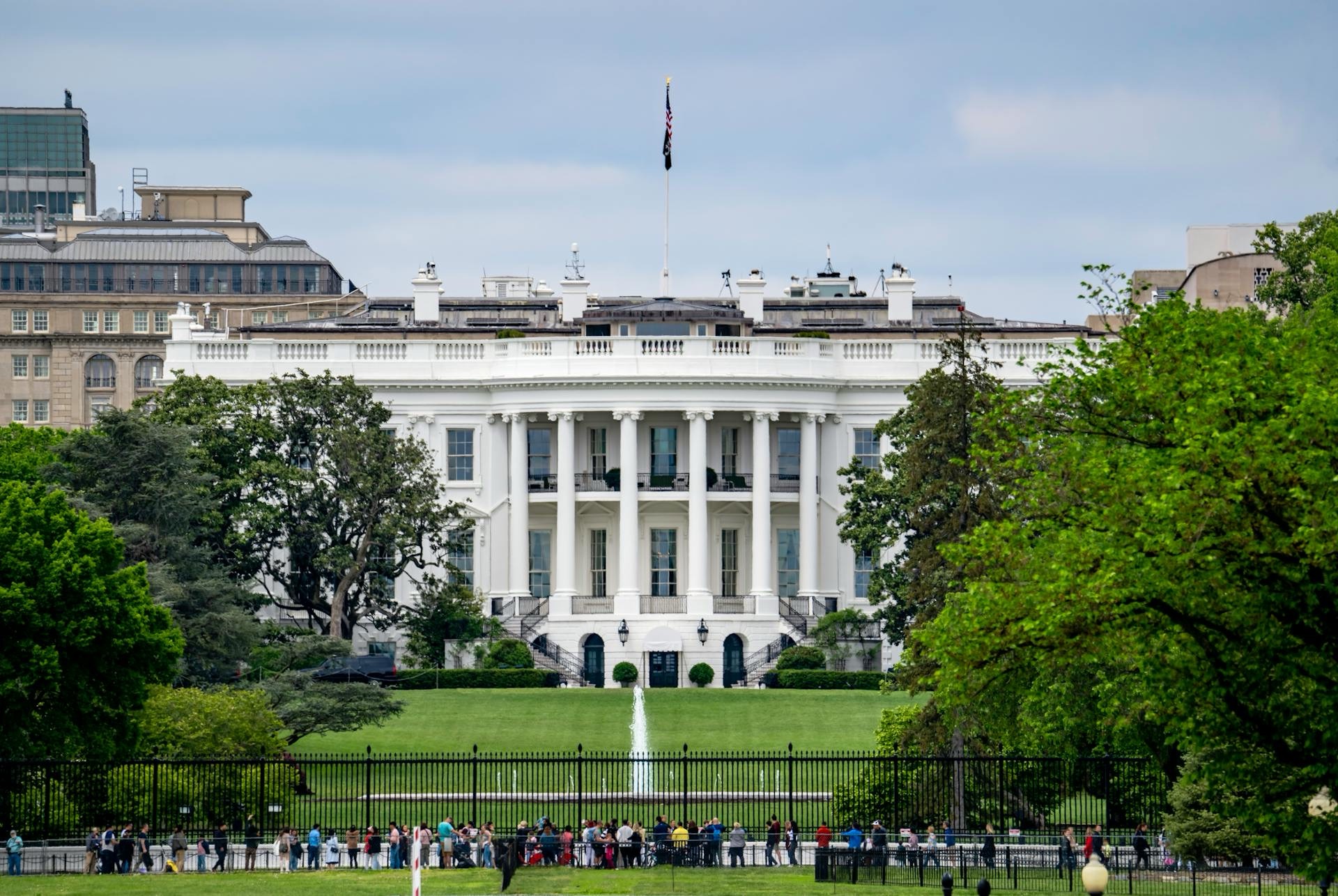
President Trump’s new foreign policy doctrine does something Washington has avoided for decades: it finally lines up America’s strategy with America’s actual interests. Instead of chasing utopian projects in far-flung regions, the Trump administration is putting the Western Hemisphere first, our neighbors, our borders, our trade routes, our seas.
In plain terms: Making the Americas great again is now the organizing principle of U.S. foreign policy, and that is exactly where it should be.
For too long, both parties treated the Western Hemisphere as an afterthought. We poured blood and treasure into the Middle East, underwriting European security, expanding NATO, and funding development projects all over the world, while cartels tunneled under our border, Chinese influence grew in Latin America, and mass migration reshaped our own cities and towns. Trump’s new National Security Strategy says, in effect, “No more. Our hemisphere comes first.” That is not isolationism; it is strategic sanity.
The Western Hemisphere: Our First Responsibility
The Americas are our home field. This is where our energy resources, food supplies, key trade routes, and closest partners sit. Yet for years we let foreign powers buy up ports, mines, and telecom networks across Latin America and the Caribbean. We tolerated narco-states on our doorstep and pretended that “border security” was somehow separate from “foreign policy.”
Trump’s realignment closes that gap. It treats cartels, mass illegal migration, and foreign meddling in the hemisphere as first-order national security threats, not side issues. It embraces the spirit of the Monroe Doctrine (updated for the 21st century) by making it clear that hostile regimes and outside powers will not be allowed to turn our neighborhood into a staging ground against the United States.

This is not about bullying our neighbors; it is about mutual prosperity and stability. A secure, growing Western Hemisphere, from Canada to Chile, is good for everyone who lives here. It means safer streets, more predictable trade, more energy independence, and fewer incentives for people to flee their home countries in desperation.
Europe in Decline: A Hard Truth Washington Needed to Say
Trump’s strategy also dares to say out loud what polite diplomats whisper off the record: Europe is a continent in decline, especially Western Europe.
Germany, once the industrial engine of the continent, has deliberately de-industrialized large parts of its economy through overzealous green policies and energy dependence on adversarial suppliers. Its manufacturers are under pressure, its energy costs have soared, and its political class still acts as if this is sustainable.
France, the UK, Spain, and other Western European countries are under intense strain from decades of poorly managed mass migration. Political leaders talked about “integration” while allowing the creation of parallel societies with weak social cohesion. Many newcomers were never given, or never accepted, a clear path into the civic and cultural mainstream. Today, whole districts in major cities feel disconnected from the national story, with rising tensions and frequent unrest.
This is not an attack on any group of people as such; it is a criticism of elite policies that imported large populations, failed to integrate them, and then tried to police speech instead of fixing the underlying problems. Rather than admit their mistakes, Western European governments increasingly resort to censorship, hate-speech laws, and social shaming. They are losing confidence in their own cultures and punishing citizens who notice.
Trump’s strategy recognizes that this trajectory, with declining birthrates, fraying identity, energy mismanagement, and speech controls, makes parts of Western Europe weaker, not stronger. A Europe that does not believe in itself cannot be a reliable pillar of the free world.
Eastern Europe: The Exception That Proves the Rule
The one bright spot on the continent is Eastern Europe, where many countries have fought hard to preserve their traditions, faith, and national identity after surviving communism. These societies, while far from perfect, still understand that a nation is more than a market zone or a bureaucratic project. They protect their borders, defend their cultures, and resist being lectured by distant technocrats.
Trump’s strategy implicitly acknowledges this difference. It stops pretending that all of Europe is on the same path or shares the same values. It treats Europe as uneven terrain: some countries still have a strong spine; others have allowed their institutions and identities to erode. That is a realistic assessment, not an insult.
Why This Realignment Makes America Stronger
Critics will scream that Trump is “abandoning allies” or “retreating from the world.” That is nonsense. The United States still has the world’s dominant military, global reach, and unmatched power to shape events. What is changing is the priority list.
Instead of treating Europe’s internal debates as sacred and untouchable while ignoring chaos in our own backyard, Trump is:
• Putting the Western Hemisphere at the top of U.S. strategic priorities.
• Demanding that Europe take responsibility for its own defense and its own social choices.
• Ending the failed model of democracy-export and nation-building in regions that do not want or cannot sustain it.
• Reconnecting foreign policy to the everyday concerns of Americans: border security, economic opportunity, safety from drugs and criminal networks.
This is what an America First (and Americas First) strategy looks like in practice. It does not mean walking away from the rest of the world; it means recognizing that our first duty is to secure our own hemisphere and our own people, then align everything else around that core mission.
Making the Americas Great Again
For decades, the experts told us that history had ended, that global integration would magically solve old problems, and that anyone who questioned the model was backward or dangerous. Trump’s foreign policy realignment is a direct rebuke to that fantasy. It accepts reality: power, borders, culture, and geography still matter. Who lives next door to us matters. What happens in our hemisphere matters more than what a think tank in Brussels wants.
“Making the Americas great again” is not a slogan; it is a strategic map. It means:
• Strong borders and secure seas.
• Healthy, growing economies from North to South America.
• Less dependence on unstable regimes halfway across the world.
• A clear message to rivals: this hemisphere is not for sale.
The president and his administration are right to call out Europe’s decline, right to prioritize the Western Hemisphere, and right to insist that American foreign policy finally serve the interests of American citizens. For the first time in a long time, our strategy matches our reality.
That is not reckless. That is leadership.




Leave a Reply