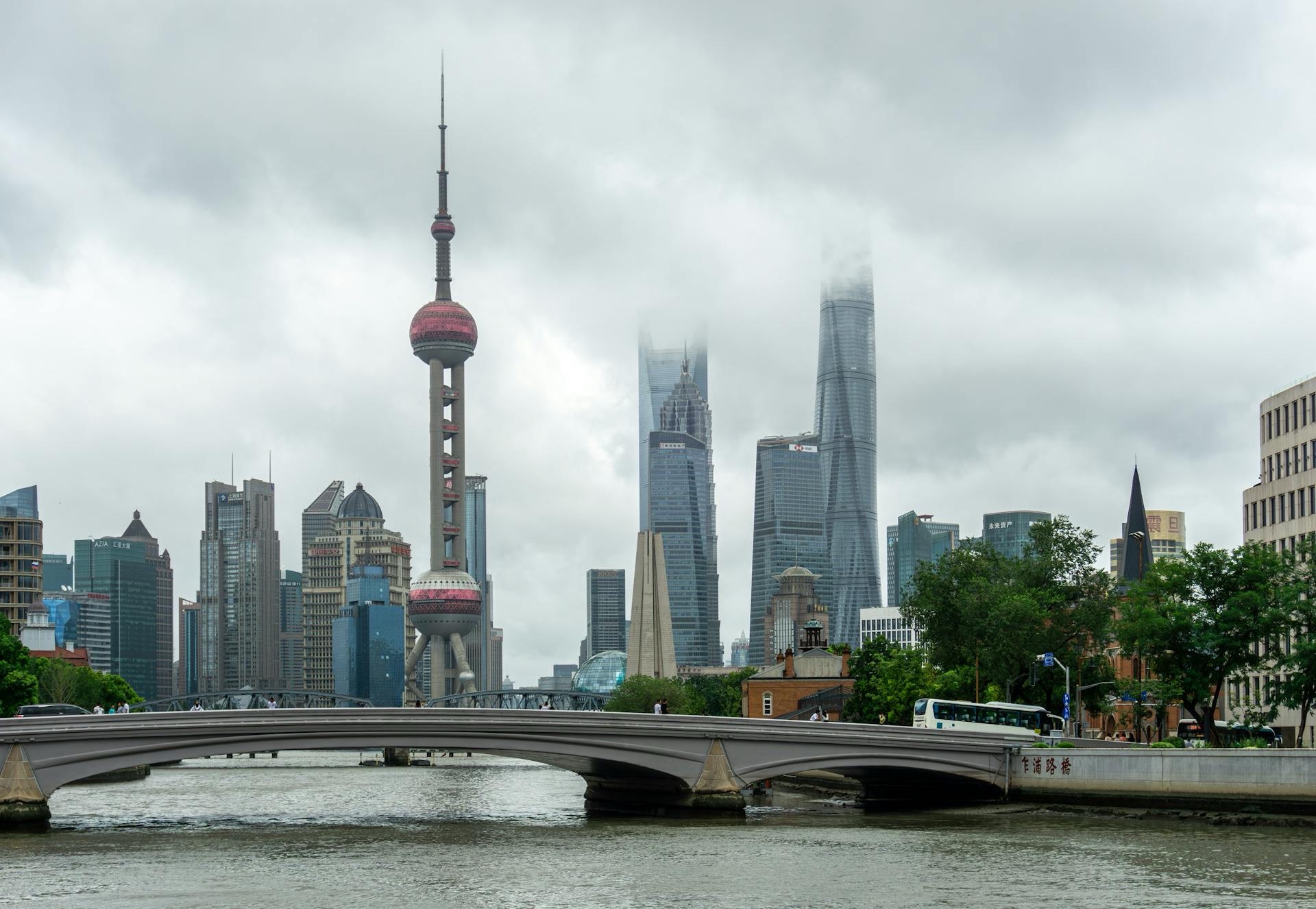
Beijing looks huge on paper. But its economy, military and politics are far more fragile than the hype.
For years, we have talked about China as if it is an unstoppable superpower, about to overtake America, dominate the world, and dictate the future. That story helps Beijing’s propaganda and scares Western voters into defeatism.
It is also badly overstated.
China is a serious rival. It is a massive manufacturing hub, and the United States and its allies did become dangerously dependent on Chinese factories for everything from phone parts to basic medical gear.

But that dependency is already shifting, and the story of an all powerful China falls apart as soon as you look at how China actually works.
The supply chain chokehold is shrinking
Covid exposed the truth. We allowed a single authoritarian state to become the workshop for half the planet. When the pandemic hit, China hoarded medical supplies and cut exports. Suddenly the world realized how vulnerable it was.
Since then, companies and governments have started moving production to Mexico, India, Southeast Asia, Eastern Europe, and back to the United States and its allies. It is messy and incomplete, but the direction is clear: diversify away from China.
Beijing has made things worse for itself by weaponizing trade, especially rare earths and critical minerals. Every time the Communist Party threatens to cut off something vital, it gives the rest of the world another reason to build alternatives.
An export economy that cannot afford a real war
China’s model depends on the world buying what it makes. It is still heavily reliant on exports and open shipping lanes.
Any serious conflict, especially over Taiwan, would hit those sea lanes immediately. Even without a formal blockade, insurance costs would explode, shipping would reroute, and global buyers would scramble to move production for good.
No exports means no revenue, no jobs, and serious internal instability for a regime already dealing with youth unemployment, a property bust, and slowing growth. Beijing can rattle sabers. But a real war would threaten its entire economic model.
On top of that, China is the world’s biggest food importer. It does not grow enough to feed its population of roughly one point four billion people. If shipping is disrupted, food security becomes a political time bomb.
A big army with almost no recent combat experience
On parade, the People’s Liberation Army looks formidable: a huge army, a fast growing navy, missiles, drones, and more.
But militaries are not judged by parades. They are judged by combat.
China has not won a major war in decades. Its last real fight, against Vietnam in nineteen seventy nine, went badly. The PLA has almost no modern wartime experience. By contrast, United States and allied forces have spent the past thirty years operating in real world conflicts, for better or worse.
Yes, China now has more ships than the United States Navy on paper. But numbers are not everything. China lacks a wide network of secure overseas bases, its logistics for long distance operations are untested, and complex missions like carrier aviation and large scale amphibious landings are incredibly hard even for experienced militaries.
Then there is the political problem. The PLA is first and foremost the Communist Party’s army. Promotions and commands are filtered through ideological loyalty tests. That kind of system punishes initiative and rewards obedience. In modern, fast moving warfare, waiting for political permission can be fatal.
Taiwan: hard to conquer, harder to hold
If China ever invades Taiwan, it faces enormous risks.
To win, Beijing would have to:
• Move huge numbers of troops and equipment across open water.
• Land them under fire from Taiwanese missiles, submarines, and aircraft.
• Fight through urban areas against a population that overwhelmingly does not want Communist Party rule.
Taiwan is an island fortress with defenders fighting for their homes, their freedoms, and their high tech economy. Even if China somehow occupies the island, it could inherit a ruined economy and a population that hates them.
And if the invasion fails, or turns into a bloody stalemate, the political fallout at home could be catastrophic. A regime that bases its legitimacy on strength cannot easily survive a high profile humiliation. Communist Party leaders understand that any move on Taiwan is a bet the regime gamble.
A paper tiger with real claws and real limits
None of this means China is weak. It is not. It can bully neighbors, punish small countries economically, and create real problems for the United States and its allies.
But that is a long way from being a true global superpower on par with an American led alliance that:
• Dominates the world’s advanced technology and finance.
• Controls most of the key sea lanes and undersea infrastructure.
• Has far more combat tested forces and more sophisticated space and satellite networks.
China is strong but brittle: dependent on exports, dependent on food imports, untested in modern war, and run by a paranoid party state more focused on loyalty than competence.
The danger is not that China is unstoppable. The danger is that we keep talking about it as if it is, handing Beijing free psychological victories and scaring ourselves into bad decisions.
We should respect China as a serious rival, not mythologize it as a superpower that cannot be checked. The United States and its allies still hold the higher ground in the air, at sea, in space, and in the world economy. It is time we started acting like it.


Leave a Reply